
Expansion of LNG Power in Japan Further Accelerates Climate Change
Kiko Network believes that a transition to a decarbonized society requires a phase-out of Liquefied Natural Gas (LNG) power, which exacerbates climate change. However, because the Japanese government positions LNG as a “transition fuel”, project plans for new construction and replacement are proceeding with environmental impact assessments (EIAs) and construction one after another. Furthermore, with the current Trump Administration of the United States promoting fossil fuel expansion and encouraging Japanese investments, LNG projects involving Japanese public and private sectors are materializing one after another.
※This page was created and edited to provide an overview of LNG power generation in Japan. For information on coal-fired power, please visit Japan Beyond Coal, a platform that monitors coal-fired power plants in Japan.
Contents
1.Role of LNG in Japan’s Strategic Energy Plan
2. Issues with LNG
1)High Greenhouse Gas Emissions
2)LNG Pricing Affected by Global Geopolitical Instability
3)Problems and Oversupply in the LNG Supply Chain
3. Overview of Japan’s Current LNG Landscape
1)Top 10 LNG Thermal Power Operators
2)New Projects and Decommissioning Plans
4. Issues with “Decarbonization” of LNG
・Reality of Hydrogen Utilization
・Hydrogen Co-firing is not a Decarbonized Form of Thermal Power Generation
5. Institutional Support for LNG-fired Power Generation
・Capacity Market
・Long-term Decarbonization Power Source Auction
・Price Differential Support under the Hydrogen Society Promotion Act
Conclusion: Toward the Cancellation of New Projects and Phase-out of LNG-fired Power Stations
Information Materials: Domestic LNG-fired power plants (TBD)
1. Role of LNG in Japan’s Strategic Energy Plan
The Strategic Energy Plan influences not only energy policy but also domestic industries. Following the fundamental S+3E* principle, the Japanese government continues to position LNG power as a critical energy source during the transition period, with the purpose of providing energy supply stability. However, in the 7th Strategic Energy Plan approved by the Cabinet in February 2025, the government did not specify percentages for the sources in the future power mix, perhaps as an attempt to avoid criticism from the international community. Citing the unpredictability of the future energy mix, the plan only states a vague target of “approximately 30-40% thermal power,” without providing a breakdown of the proportions of coal, gas, and oil.
*S+3E refers to the four principles behind Japan’s energy policy: Safety, Energy Security, Economic Efficiency, and Environment.
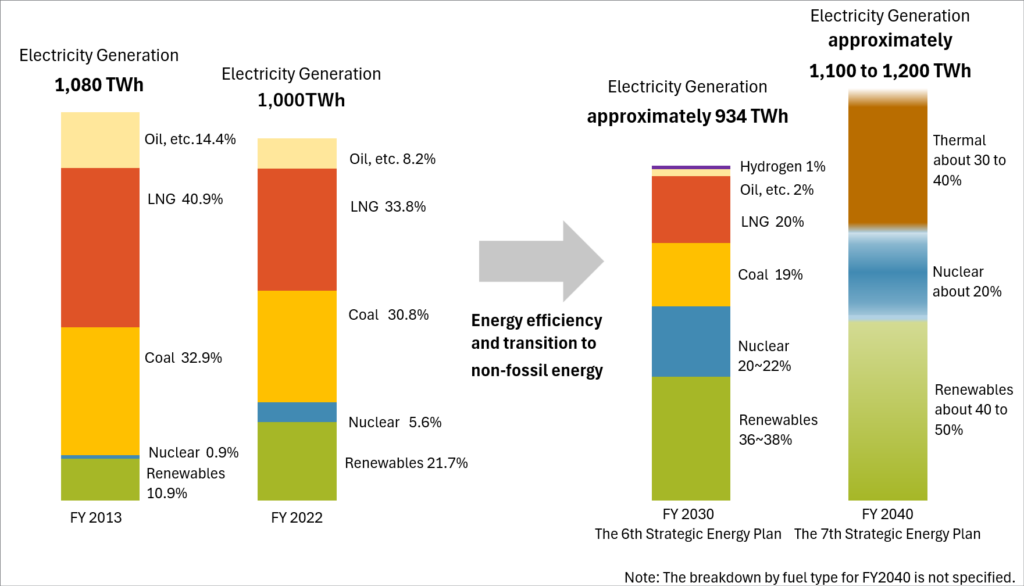
The 7th Strategic Energy Plan specifically states that LNG-fired power will be used as a realistic transition fuel and considered as follows (the specific issues surrounding LNG are detailed in Section 2).
- LNG power is necessary as a means of transition toward decarbonization of power sources, to maintain thermal power capacity needed for a stable power supply and ensure stability in future supply and demand uncertainties
- Among fossil fuels, LNG has the lowest greenhouse gas (GHG) emissions and is centrally positioned as a balancing power source for renewable energy
- Shift toward natural gas driven by fuel conversion can contribute to reducing the overall environmental impact
- With future technological advancements, LNG is planned to remain an important energy source even after achieving carbon neutrality
- LNG power is considered necessary to compensate for output fluctuations due to renewable energy, etc.
The Japanese government claims thermal power, currently constituting 70% of the power mix, to be a necessary component in the domestic energy mix. The government argues that thermal power should continue to play a central role in providing supply capacity to meet high electricity demand, regulating capacity to compensate for the fluctuations of renewable energy sources, and inertia and synchronizing force to maintain system stability. The government presents LNG as just one of many paths to achieve carbon neutrality.
Fundamentally, a “decarbonized power source” should exclusively refer to sources that do not emit carbon dioxide (CO₂) during power generation. In addition to renewable energy such as solar, wind, hydro, geothermal, and grid-connected batteries, the Japanese government also includes biomass, nuclear power, and even hydrogen/ammonia co-firing and LNG-fired power, which help extend the lifespan of fossil fuel infrastructure, as decarbonized power sources. The Japanese government has interpreted LNG power as a “decarbonized power source,” but most corporations seeking such sources are specifically looking for renewable energy. This discrepancy makes it clear that current policies are failing to provide the kind of energy that is truly needed.
2.Issues with LNG
There are three main issues with LNG power generation:
1)High Greenhouse Gas Emissions
2)LNG Pricing Affected by Global Geopolitical Instability
3)Problems and Oversupply in the LNG Supply Chain
Each issue is outlined below.
1)High Greenhouse Gas Emissions
Efforts to reduce CO2 emissions are underway around the world. LNG is often framed as a “transition fuel” or “balancing solution" due to its lower carbon intensity per unit of heat (emission factor or emission intensity) compared to coal. Materials by the Ministry of the Environment suggest that developing Gas Turbine Fuel Cell Combined Cycle (GTFC) technology by 2030 will lead to further CO₂ reductions. However, it is clear that as the number of operating power plants increases, overall CO₂ emissions will rise. Increasing LNG dependency is incompatible with the aim of “achieving a fully or predominantly decarbonized power sector by 2035" as agreed at the 2022 G7 summit in Elmau, Germany. To uphold these climate commitments, there is no room left to expand LNG power capacity.
Figure: CO₂ Emission Factor by Fuel Type (CO₂ emissions per unit of electricity generated)
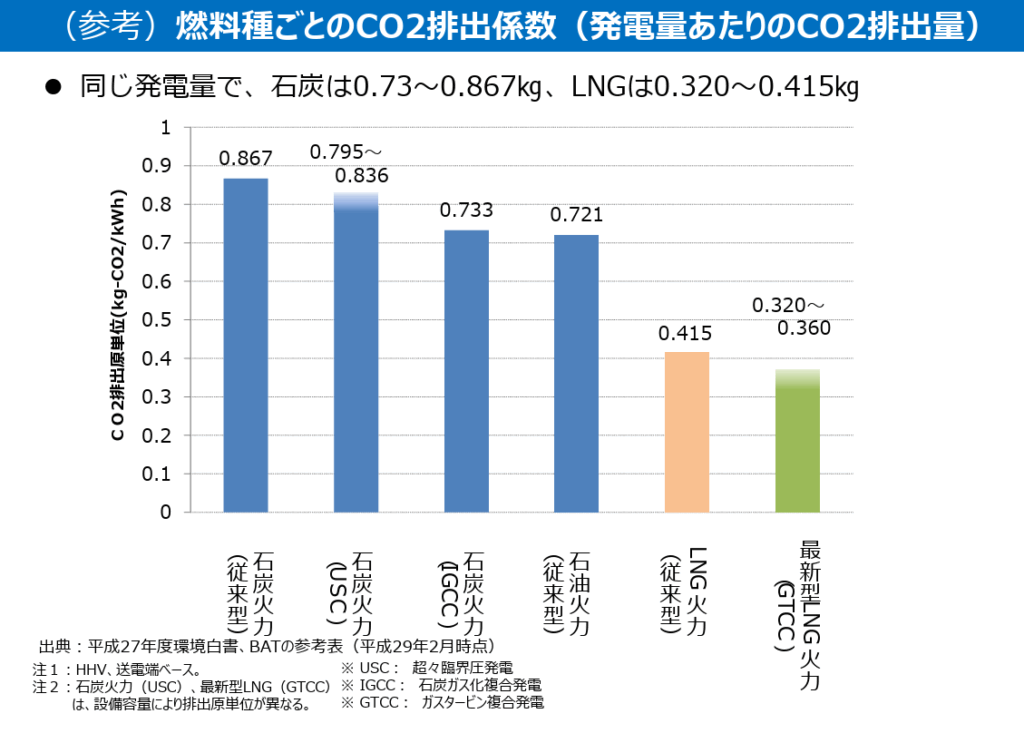
Furthermore, LNG is problematic not only due to leakage and emissions of greenhouse gases (GHGs), including methane, during drilling, production, and transportation, but also because of the energy consumption and CO₂ emissions throughout its entire lifecycle. Considering emissions in the liquefaction process and tanker transport makes it impossible to label LNG environmentally friendly. (See Section 2.3: Problems and Oversupply in the LNG Supply Chain).
Professor Robert Howarth of Cornell University has published research indicating that the GHG footprint of LNG exported from the United States over 20 years is 33% worse than that of coal. The short-term greenhouse effect of methane, the main component of natural gas, is more than 80 times that of CO₂. Professor Howarth points out that LNG places a heavy burden on the environment throughout its entire life cycle (including production, liquefaction, and transportation) due to the high energy consumption during extraction and liquefaction and the methane emissions during the process.
Despite these risks, major Japanese power companies, such as JERA, are moving forward with LNG projects beginning operation after 2030. These companies follow the Japanese government’s positioning of LNG as the key component of energy security, intending to use LNG power beyond 2050. Although the plan is to offset CO2 emissions from LNG combustion through Carbon Capture and Storage (CCS), the implementation of this strategy comes with technical and geographical hurdles, such as the lack of suitable storage sites in Japan.
2)LNG Pricing Affected by Global Geopolitical Instability
LNG supply and pricing are significantly influenced by global geopolitical risks, such as political instability in gas-producing countries or at maritime choke points. Furthermore, since the signing of the Paris Agreement in 2015, shifts in fossil fuel policies and a decline in investment in the upstream sectors such as gas and oil fields have also driven price volatility. As Japan relies on imports for its fuel supply, transport costs of LNG inevitably contribute to price fluctuations.
Figure: Trends in Natural Gas Prices
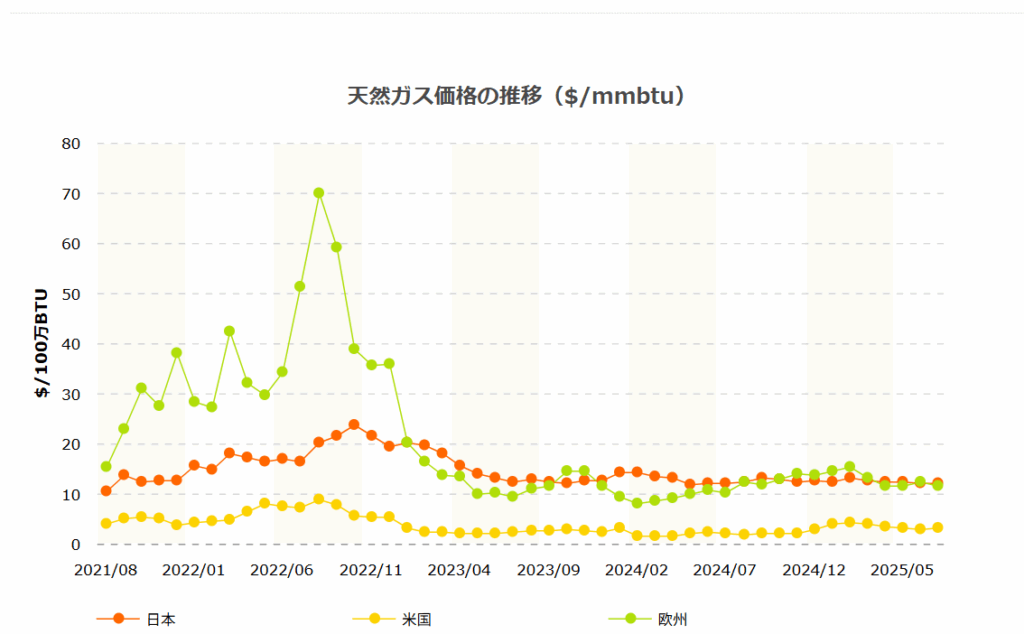
Red dots: Japan, Yellow dots: United States, Green dots: EU
According to long-term natural gas price outlook and forecast by the U.S. Energy Information Administration (EIA), LNG prices are expected to continue rising.
Figure: Long-Term Forecast for Natural Gas Prices
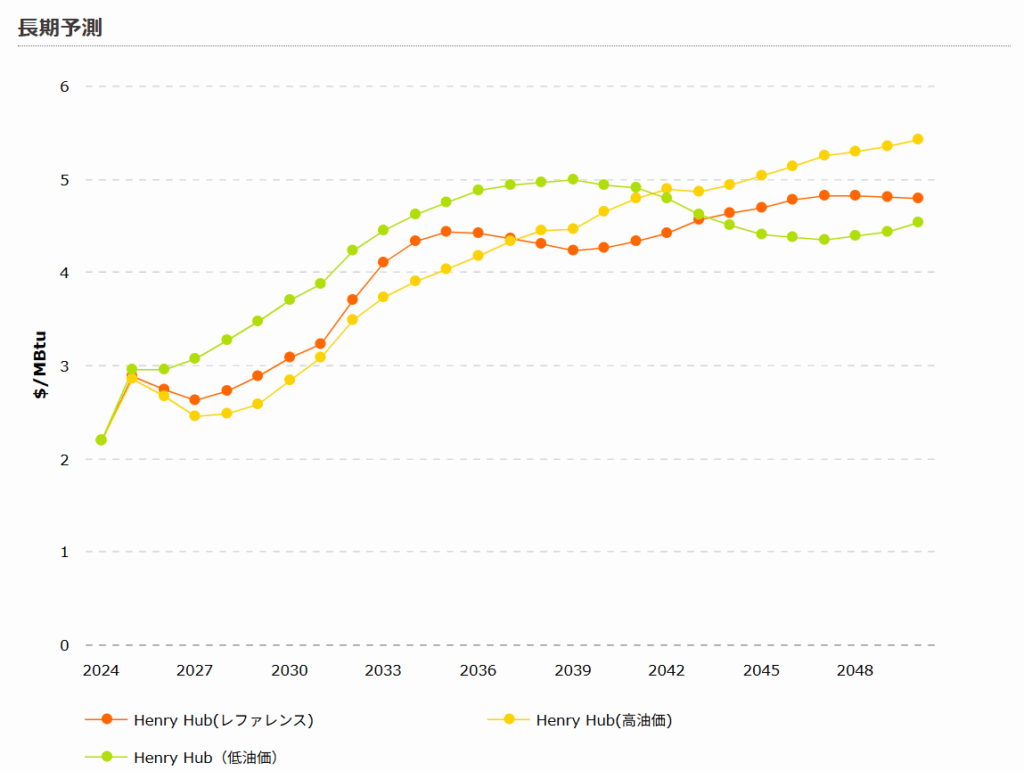
Red dots: Japan, Yellow dots: United States, Green dots: EU
When the 2022 Russian invasion of Ukraine triggered a global LNG shortage, Japan was not exposed to extreme fluctuation in LNG prices, due to a high proportion of long-term LNG supply contracts (with stable pricing) even when spot prices widely fluctuated. However, as global competition for LNG intensifies, uncertainty of procurement increases. Combined with the difficulty of storing (reserving) LNG in the long-term and subsequent supply instability, it is predicted that securing new long-term international contracts will become increasingly difficult in the future. Rather than increasing reliance on LNG power, Japan needs to act strategically when aiming for carbon neutrality.
3)Problems and Oversupply in the LNG Supply Chain
LNG is used as fuel for thermal power generation and as a raw material for city gas. According to trade statistics from the Ministry of Finance, Japan’s top three LNG import sources in 2024 were Australia (38.2%), Malaysia (15.5%), and the United States (9.6%). That year, total imports reached approximately 65.9 million tonnes. Furthermore, Shell’s LNG report predicts that by 2040 global LNG demand will reach between 630 million tonnes and 718 million tonnes per year. Many companies, including Japan’s largest LNG utility JERA and trading houses, are focusing on international LNG pipeline projects, in regions such as Canada and Alaska.
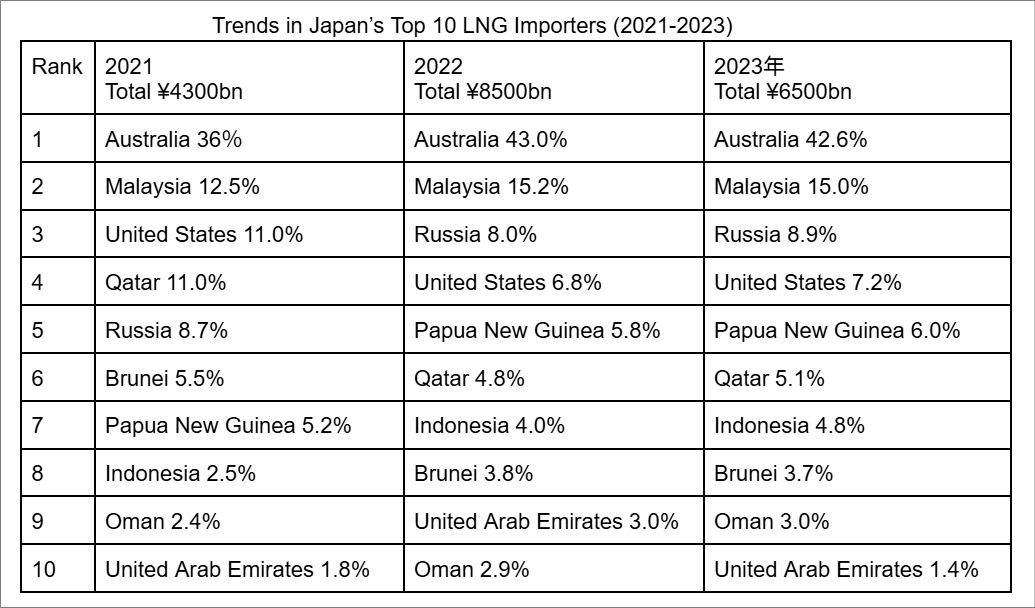
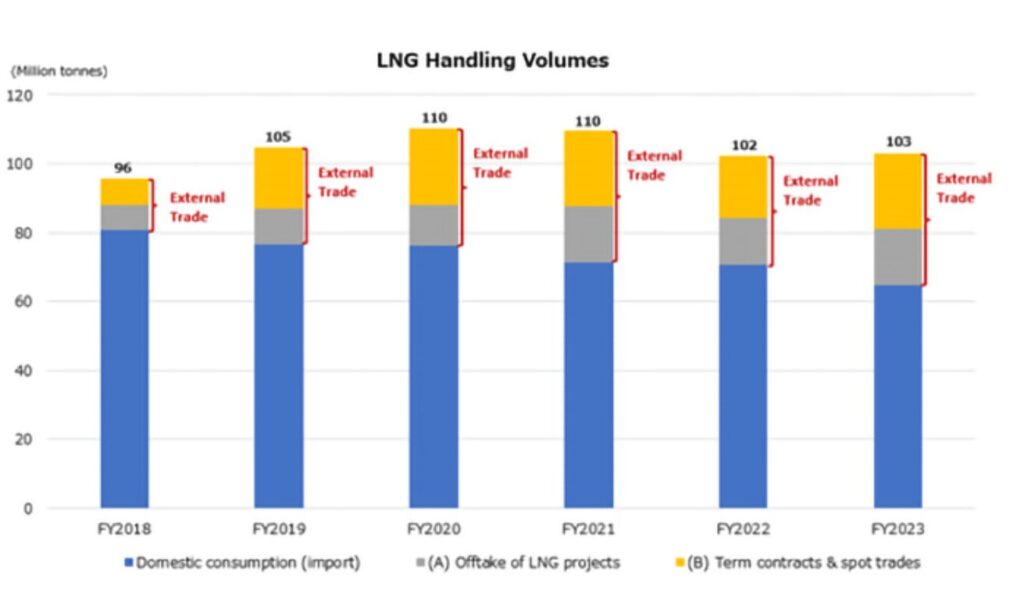
While Japan imports LNG from across the globe, its procurement faces complex risks, including production fluctuations in LNG-exporting countries and geopolitical instability. Following the Russian invasion of Ukraine, procurement prices under “spot contracts,” in which necessary quantities are traded on a transaction-by-transaction basis, have skyrocketed. Prompted by this, the Ministry of Economy, Trade and Industry is considering support measures to help companies enter into long-term LNG purchase contracts. Japan’s “New International Resource Strategy” (March 2020) set a target of 100 million metric tons per year for the volume handled by Japanese companies in fiscal year 2030, including “offshore transactions” (transactions supplying third countries). According to the Japan Organization for Metals and Energy Security (JOGMEC)’s 2024 survey, the volume of LNG traded by Japanese companies was 103.1 million metric tons in FY2023, meaning that the volume has exceeded 100 million tons every year since FY2019. Although LNG imports in the first half of 2025 are projected at 32.4 million tonnes, a slight decrease compared to the same period in 2024. In the United States, the second Trump administration lifted the suspension of LNG export permits that had been in place since 2024, and in Canada, LNG Canada began exporting LNG to the Pacific market at the end of June 2025. These shifts highlight the importance of monitoring the import volumes from 2025 onward.
Note: The Japanese fiscal year (FY) runs from April 1st until March 31st.
Japan not only imports LNG for domestic use but also actively exports it to other Asian countries. Japan’s New International Resource Strategy states, “to enhance LNG security and maintain Japanese influence in the international market to be able to secure a stable supply of LNG, and the Japanese government encourages companies to play a leading role in projects delivering LNG produced in the USA to countries of Southeast Asia or South Asia.” Following this, the government is aiming to cultivate Asian LNG demand to strengthen Japan’s procurement capabilities. In fact, out of the 103.1 million tons of LNG handled in FY2023, 38.3 million tons were sold to foreign companies in third countries, which is more than half of the domestic consumption volume (64.9 million tons). Even as imports to Japan decreased, third-country trading volumes have continued to increase.
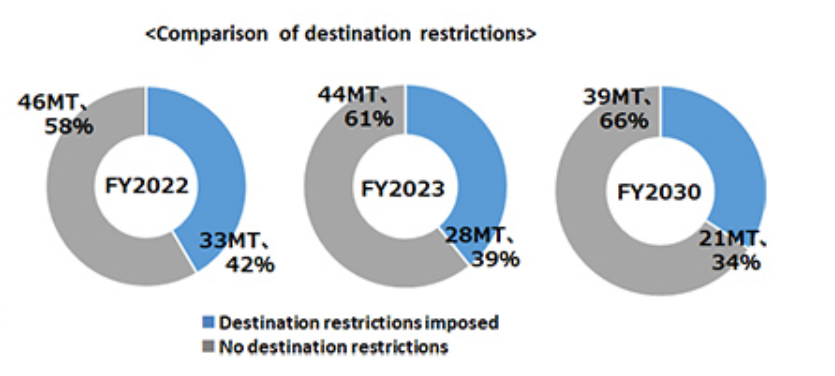
In LNG sales contracts, destination clauses have traditionally been included by suppliers to restrict which specific ports the LNG can be delivered to, as an attempt to prevent buyers such as Japan from competing with producing countries as resellers. However, these restrictions in contracts are decreasing, and according to a JOGMEC survey, the prediction will fall to 34% (21 million tons) by FY2030.
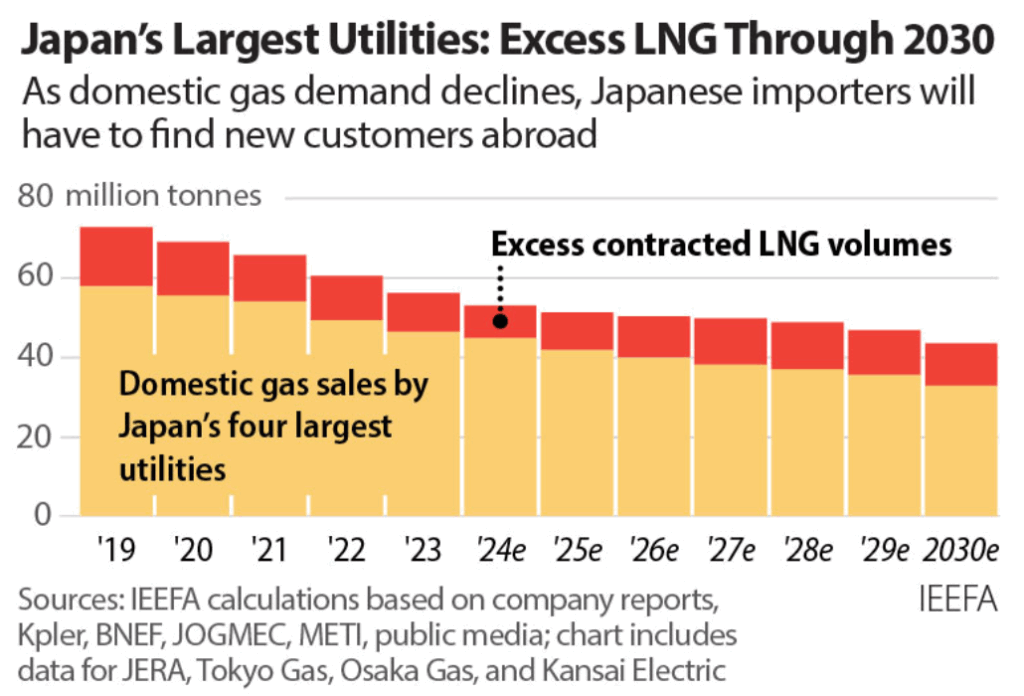
LNGの争奪戦には電力会社、ガス会社に加えて商社なども参加し、世界各地のLNG事業に巨額の公的資金および民間資金を投入しています。国内でのLNG需要が減少しても国外(特に東南アジア諸国)に転売することも前提に国外(北米やオセアニアなど)のLNGパイプライン製造に注力するようになっているのです。エネルギー経済・財務分析研究所(IEEFA)は、2030年まではLNG供給過剰が続き、世界的な供給過剰を助長する恐れがあると指摘しています。
3.Overview of Japan’s Current LNG Landscape
According to the Agency for Natural Resources and Energy, thermal power accounted for approximately 68.6% of Japan's power generation mix in FY2023, with LNG accounting for 32.9%, followed by coal (28.3%) and oil (7.4%). In addition to the more than 200 LNG power units operating in Japan, new construction projects scheduled to begin operation after 2030 are successfully clearing EIAs.
1) Top 10 LNG Thermal Power Operators
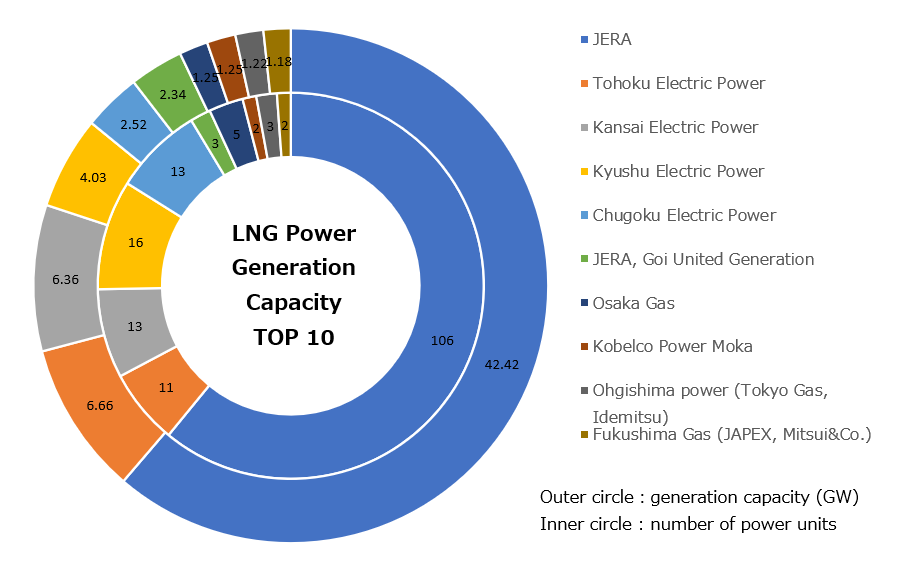
When comparing the LNG power plant capacity of major power companies, JERA stands out, followed by Tohoku Electric and Kansai Electric. However, there is a notable difference in the number of power plants, as JERA has 42.4 gigawatts (GW) (106 units), while Tohoku Electric has 6.66 GW (11 units) and Kansai Electric has 6.36 GW (13 units). (As of January 2026)
2)New Projects and Decommissioning Plans
In Japan, EIAs are underway for the construction of LNG power plants at more than 10 locations. While some of these are replacement projects for older units, the total installed capacity is increasing. Below is a list of new projects, plants that began operations in 2025, and plants that have been decommissioned.
Table: New Projects: Plants Currently Undergoing EIAs (as of January 2026)
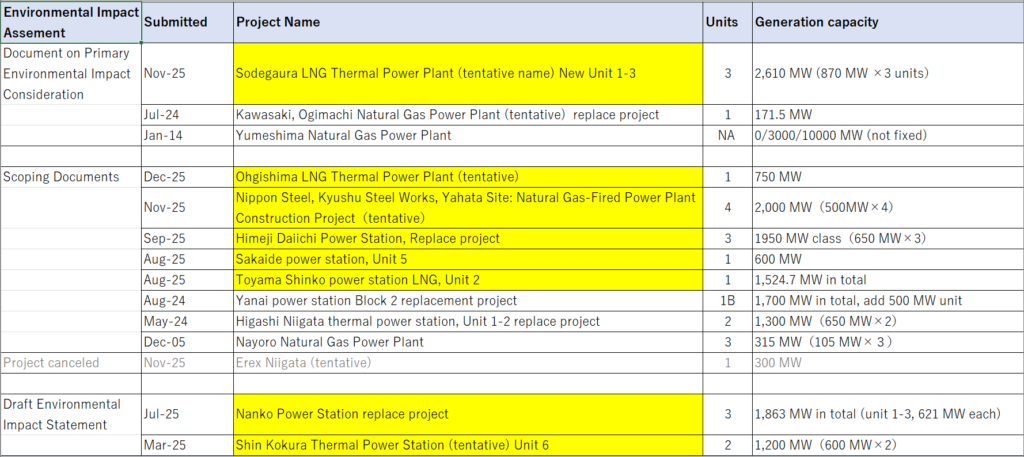
* Yellow highlight indicates projects that progressed through the assessment in 2025.
Table: Power Plants Under Construction
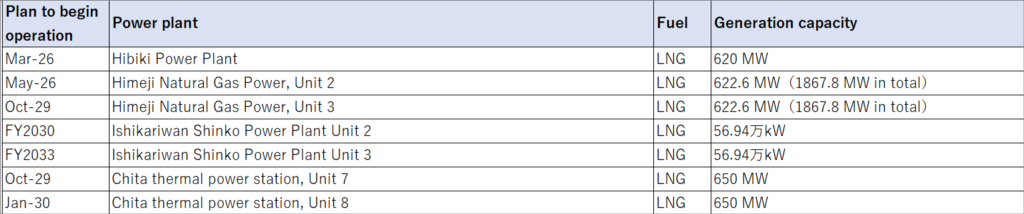
Table: Decommissioning Plans: Closing Plants in 2025

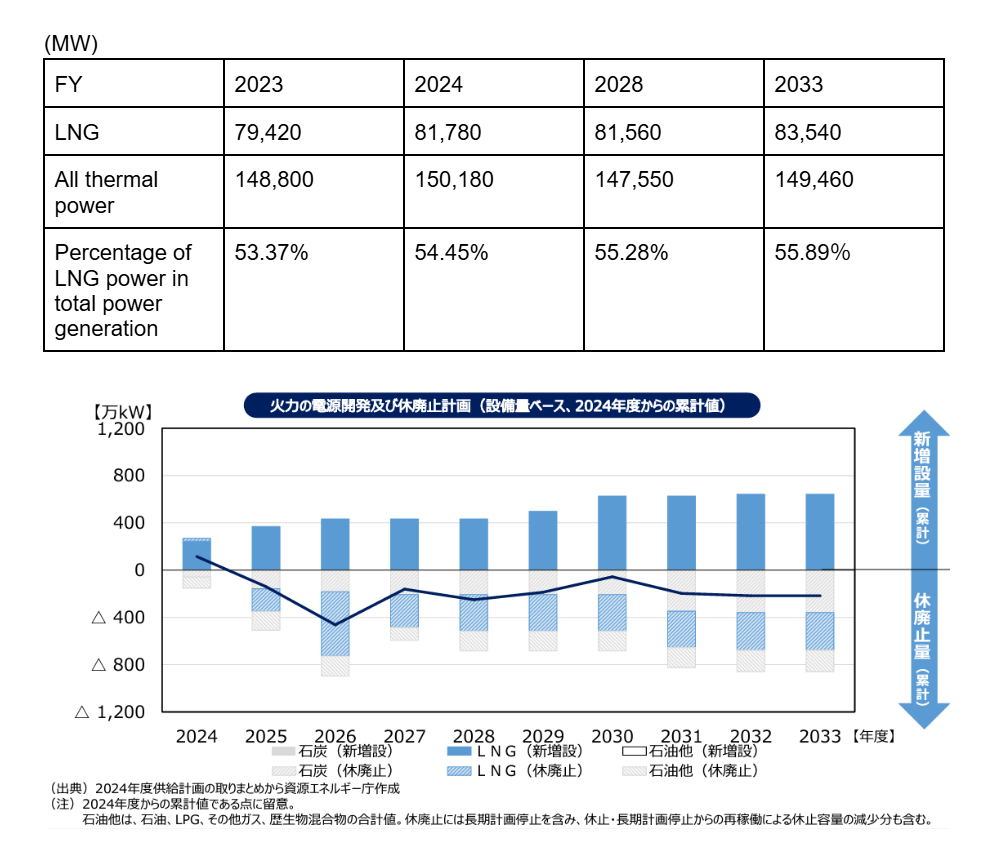
Although older LNG-fired power units that began operation in the 1960s and 70s, which have been operating for 50 to 60 years, are being decommissioned, the number of LNG-fired power plants is not expected to decrease due to replacements and new construction.
According to the Aggregation of Electricity Supply Plans for Fiscal Year 2024 by the Organization for Cross-regional Coordination of Transmission Operators (OCCTO), construction plans at 13 sites by the end of FY2033 make up an output of 6.4 GW. In contrast, decommissioning plans cover only 8 sites totaling 2.3 GW, resulting in a significant capacity increase. Based on these figures, the projected proportion of LNG in the total thermal power mix is as follows:
4. Issues with “Decarbonization” of LNG
The Japanese government positions LNG as a "transition" power source and plans to achieve "decarbonization" in the future by co-firing with hydrogen. Hydrogen utilization technology is currently in the research and demonstration stage, and achieving commercial adoption will take time. Even with future technology development, hydrogen production requires large amounts of energy. Currently, much of the hydrogen produced comes from fossil fuels (grey hydrogen), and that fact indicates decarbonization is far from actualized.
Recently, there have been growing concerns regarding hydrogen produced with renewables (green hydrogen), as the production is expensive and likely cannot be supplied at the volumes initially expected.
Furthermore, fossil-fuel-derived hydrogen with CCS (blue hydrogen) requires high energy input for production, similar to grey hydrogen. Given the lack of progress in CCS/CCUS implementation, producing and supplying enough blue hydrogen to fuel large-scale LNG power plants is unrealistic.
Reality of Hydrogen Utilization
In May 2024, Japan enacted the Hydrogen Society Promotion Act to accelerate the social implementation of hydrogen. According to an International Energy Agency (IEA) report published in October 2024, the number of projects reaching final investment decisions doubled in 12 months, suggesting that global production of low-carbon hydrogen could increase fivefold by 2030. While hydrogen production reached 97 million tons in 2023, less than 1% of that was low-carbon hydrogen. Estimates based on announced projects suggest that by 2030, low-carbon hydrogen production could reach 49 million tons per year. However, there are serious concerns as green hydrogen projects are repeatedly reported as withdrawn or delayed due to their high costs.
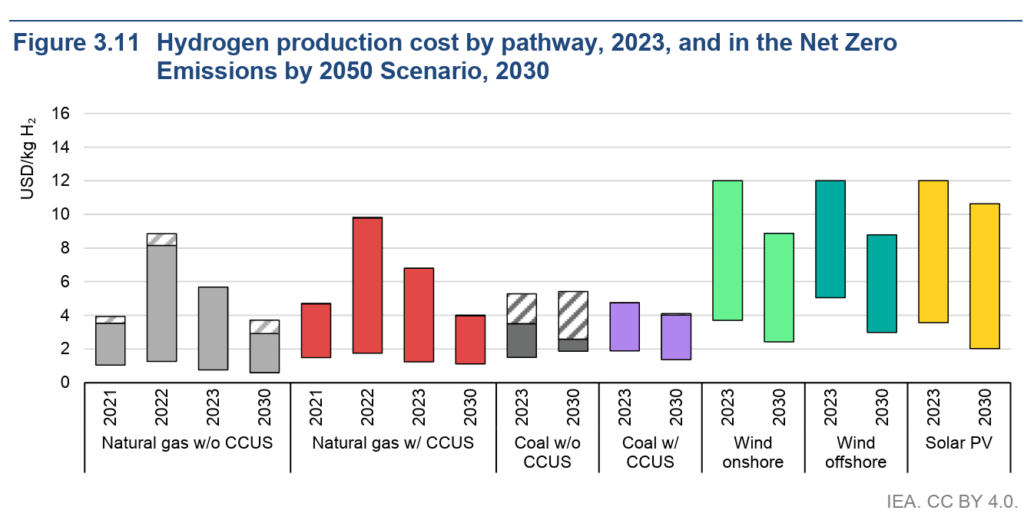
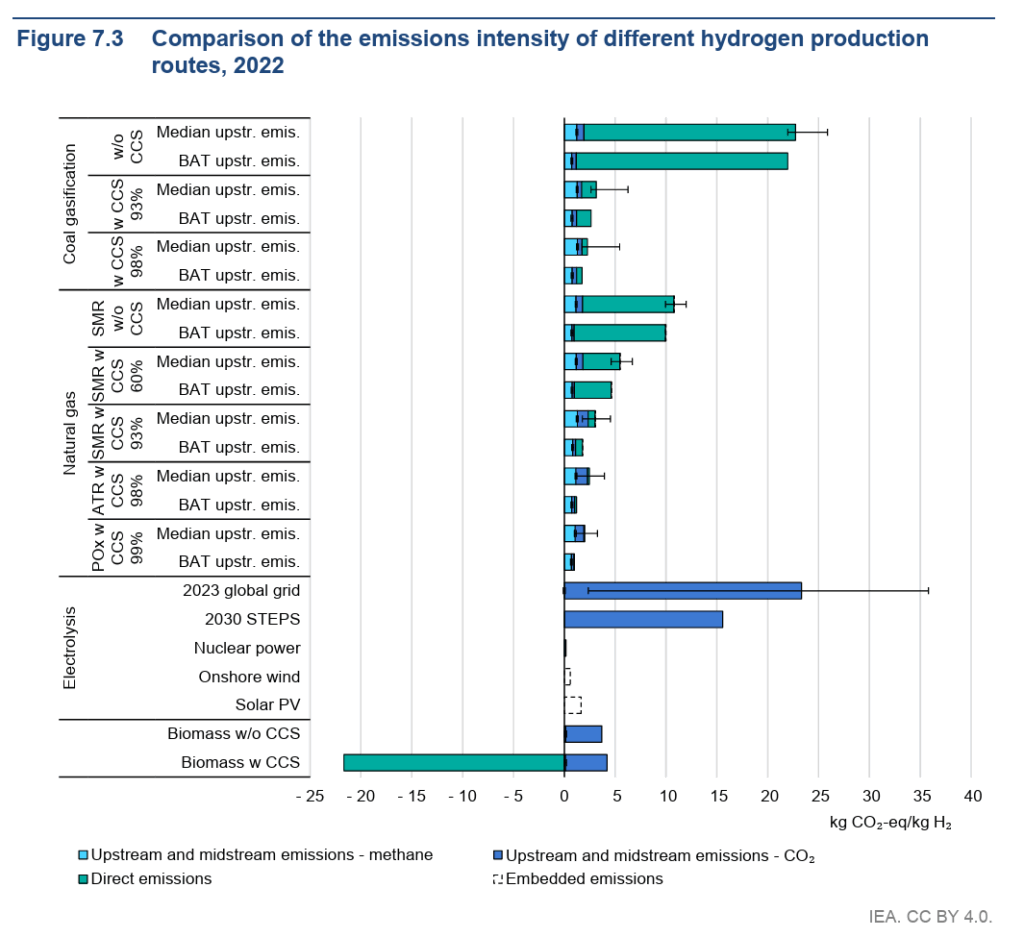
Furthermore, the CO2 emissions generated during hydrogen production require close attention. According to the IEA report, global hydrogen production emitted 920 million tons of CO2 in 2023. Out of this, nearly two-thirds resulted from unabated natural gas (10-12 kg CO2-eq/kg H2) and approximately 20% came from unabated coal (22-26 kg CO2-eq/kg H2). Since 75% to 95% of these emissions are generated directly during hydrogen production, CCUS is necessary for reduction. The following figures comparing emission intensity by production methods clearly show the high carbon emissions of hydrogen produced using coal or natural gas without CCS.
Hydrogen Co-firing is not a Decarbonized Form of Thermal Power Generation
Hydrogen fuel does not emit CO2 during combustion and is relatively easy to use in LNG-fired power plants. Therefore, experiments with LNG and hydrogen co-firing are underway, and power companies are expected to achieve 100% hydrogen combustion in their large-scale LNG plants. Power companies like JERA are including hydrogen co-firing and mono-firing (dedicated hydrogen combustion) in their decarbonization roadmaps. Heavy machinery manufacturers are developing new technologies, such as hydrogen-fueled gas turbines and hybrid boilers capable of switching between co-firing and mono-firing.
Although hydrogen has a high combustion temperature, it produces nitrogen oxides (NOx), a cause of air pollution, relatively more than natural gas. Thus, to control air pollutant emissions, specific techniques, such as adjusting the mixing ratios, injection speeds, and combustion parameters, are required. In addition, in order to export these technologies, the Japanese government is promoting the construction of new LNG plants, primarily in Southeast Asia.
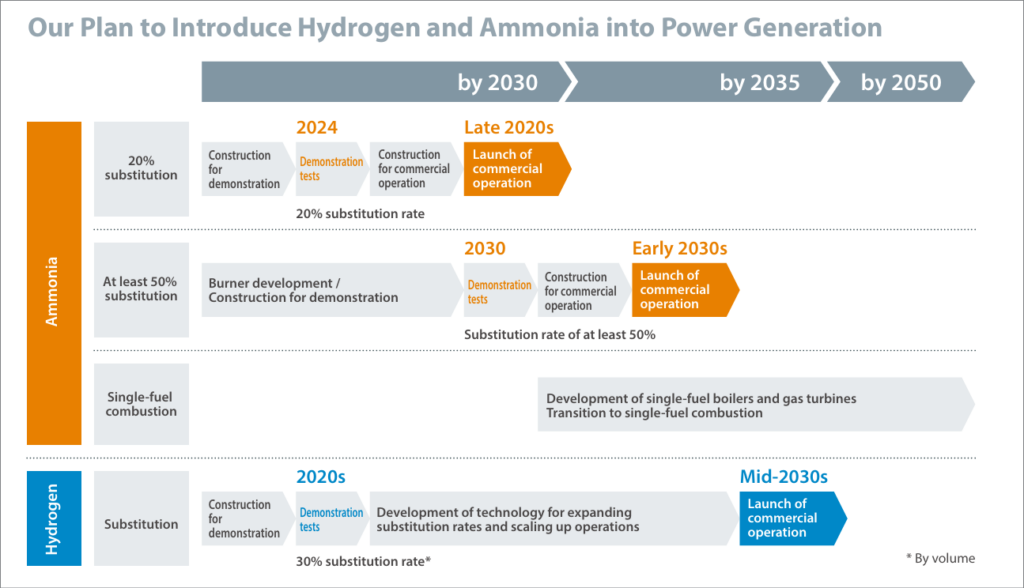
However, as previously mentioned, if low-carbon hydrogen cannot be procured, the lifecycle emissions will not decrease, and co-firing cannot be truthfully called a "decarbonized power source." Unless green hydrogen is used, co-firing is not a decarbonization solution.
<For more details on this point, please refer to Kiko Network’s position paper.>
Table: Hydrogen Demonstration Projects by Major Power Companies
| Operator | Target Power Plant | Status |
| Tohoku Electric Power | Niigata Thermal Power Station, 5-1 Unit | 2023 Oct: Hydrogen co-firing demonstration 2023 Mid-Oct - 2035 Mar: Hydrogen Co-firing ratio ~1% (by volume) |
| KOBELCO | Takasago Works | 2023 Mar: Demonstration of “Hybrid Hydrogen Gas Supply System” 2023 June: Hydrogen combustion test by supplying hydrogen to a test boiler Natural gas and hydrogen co-firing ratio: 5-20% by volume |
| Okinawa Electric Power | Yoshinoura Multi Gas Turbine Power Plant | 2024 Mar: Started hydrogen co-firing power demonstration Achieved hydrogen co-firing at a volume ratio of 30% |
| Kansai Electric Power | Himeji No. 1 Power Station Himeji No. 2 Power Station | From 2030: Plans to conduct hydrogen co-firing power demonstration By 2030: Construction of a hydrogen import terminal in the area around the power plant At Himeji No. 2, start of a demonstration experiment to capture CO₂ from exhaust gas |
Currently, while experiments are underway on hydrogen co-firing with existing fuels, technological developments are also progressing to achieve “hydrogen mono-firing” in the future with substantial funding provided by the New Energy and Industrial Technology Development Organization (NEDO). For example, NEDO supported JERA’s large-scale demonstration experiment of 20% ammonia co-firing at the Hekinan Thermal Power Station. NEDO is also supporting the technical development of hydrogen co-firing power generation related to the construction of a large-scale hydrogen supply chain.
However, several technical challenges remain: 1) hydrogen has a lower calorific value than existing fossil fuels such as natural gas, so more fuel is required. 2) Because of hydrogen’s rapid combustion rate, burner equipment must be modified accordingly. and 3) Need measures to address the increased NOx (nitrogen oxide) production. Therefore, initial experiments start with a co-firing ratio of only about 30%, gradually increasing the hydrogen ratio to achieve mono-firing. With little time remaining before 2050, it would be beneficial to move away from using hydrogen for power generation and to rather invest in the development of technologies in fields with high hydrogen demand, such as chemical manufacturing, steel production, and transportation.
As we mentioned earlier, there are differences in lifecycle emissions for hydrogen depending on the production method. In the case of green hydrogen, the higher production costs compared to existing fuel sources (fossil fuels) have a significant impact on wider adoption and expansion. In response, the Japanese government has introduced support measures such as price differential subsidies, but challenges remain, as it could include grey hydrogen in the scope of these measures. Moreover, if demand for hydrogen increases on a large scale, competition for green hydrogen will intensify, and establishing a supply chain that can provide a stable supply of hydrogen both domestically and internationally will become even more crucial. Moreover, if Japan were to primarily rely on imports, it would be unable to resolve Japan’s energy security issues.
5. Institutional Support for LNG-fired Power Generation
Capacity Market
The capacity market is a structure in which power generators are compensated for securing supply capacity (power generation facilities and output) to meet future electricity demand. As the mechanism often functions as financial support for aging thermal power plants, there are concerns that it prolongs the lifespan of power plants with high CO2 emissions and slows down decarbonization progress.
Figure: Comparison of Bid Capacity by Power Generation Method (Nationwide)
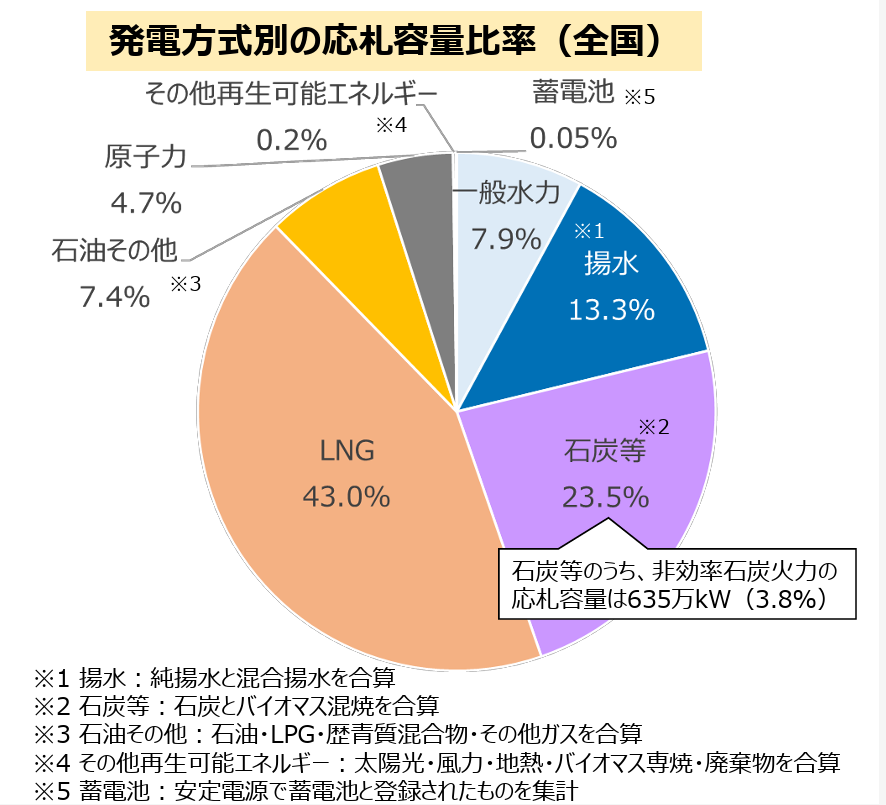
Percentage : General hydro: 7.9%, Pumped-Storage Hydropower: 13.3%, Coal: 23.5%, LNG: 43.0%,
Oil and others: 7.4%, Nuclear: 4.7%, Other renewable energies: 0.2%
According to the results of the capacity market auction for FY2027, published by the OCCTO, thermal power accounts for 70% of awarded capacity, with LNG accounting for over 40%. Due to the high barriers set on the bidding conditions, variable renewable energy sources, such as solar and wind, have low bid participation. It is clear that this system has effectively led to maintaining and preserving existing thermal power plants.
Long-term Decarbonization Power Source Auction
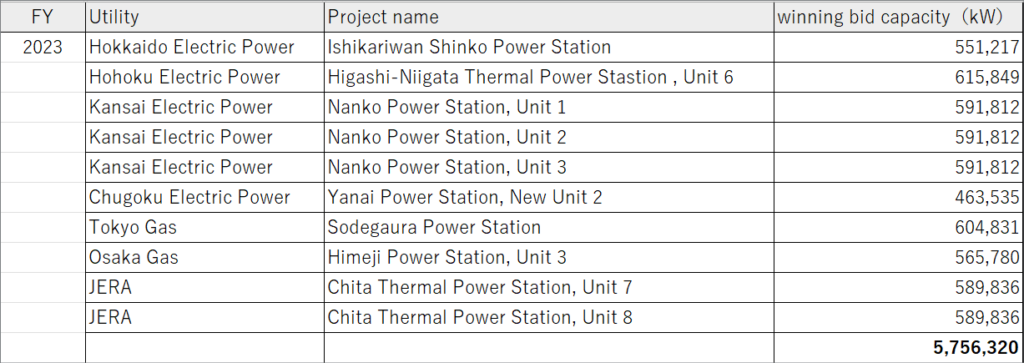
The Long-term Decarbonization Power Source Auction (LTDA) is a system designed to promote investment in power generation facilities while prioritizing decarbonization. However, the inclusion of LNG-fired power plants in the auction as decarbonized power sources serves as a means of supporting the construction of new LNG plants and the replacement of existing plants. Among the new LNG power plant construction and replacement projects currently undergoing EIAs, those that have secured contracts as long-term decarbonized power sources will receive fixed annual payments at a predetermined rate for 20 years starting from the date of operations, on the understanding that they will eventually transition to hydrogen co-firing or mono-firing. These timelines are inconsistent with the 2050 decarbonization roadmap.
Table: Results of the Capacity Market Auction

Price Differential Support under the Hydrogen Society Promotion Act
The Hydrogen Society Promotion Act was established in May 2024 to support fuels such as hydrogen, as hydrogen production and supply are cost-intensive. Under this Act, in order to establish businesses supplying low-carbon hydrogen and its derivatives, the government will subsidize the difference between the costs of hydrogen production and transportation (domestically and internationally) and the prices of existing raw materials and fuels. The price differential support will be funded by taxpayers for a long-term period of 15 years.
On the other hand, the introduction of Carbon Pricing aimed at reducing GHG emissions is scheduled to begin in FY2028. Until then, the government will use public funds to subsidize hydrogen and its derivatives, which are costly and have limited emission-reduction benefits. The Japanese government should reconsider its strategy of using public funds to expand hydrogen demand.
Conclusion: Toward the Cancellation of New Projects and Phase-out of LNG-fired Power Stations
Despite the agreement at the 2023 G7 Ministers' Meeting on Climate, Energy and Environment to accelerate the phase-out of fossil fuels such as coal and natural gas, there is no indication that Japan is reducing LNG use. On the contrary, EIAs for LNG power plants are progressing in several regions.
Considering that thermal power is one of the main drivers of intensifying climate change, and the international agreement to aim for decarbonization of electricity by 2035, new projects should be canceled, and Japan must shift towards phasing out existing facilities as soon as possible.
The Japanese government and electric utilities have stated that they are working towards a Hydrogen Society, intending to eventually operate entirely on green hydrogen. However, for the time being, they are planning to expand hydrogen demand by establishing hydrogen co-firing technology even while using grey hydrogen, which has been criticized as problematic both domestically and internationally. Furthermore, the conversion efficiency of producing green hydrogen by water electrolysis using renewable energy such as solar power is generally around 60-70%, and development of equipment capable of reaching 80-90% has been progressing in recent years, the cost of installing electrolysis equipment remains a major challenge. While the cost gap between low-carbon hydrogen and unabated fossil fuels is currently a barrier to project development, the IEA predicts this cost gap will narrow by 2030.
The Japanese government must either abolish or fundamentally revise the system of the capacity market and LTDA. Instead of focusing on high-cost LNG-fired power generation and hydrogen co-firing, which do not lead to genuine CO2 emission reductions, low-cost technologies that reliably lead to emission cuts should be prioritized. We strongly urge the government to respond to the voices of citizens and the demands of businesses who want to use renewable energy, and to firmly promote policies to expand it.
Information Materials
Kiko Network, 【Position Paper】Japan doesn’t need 10 GW of new LNG-fired power plants: It needs a Strategic Energy Plan with a roadmap to phase out thermal power(October 2024)
LNG-related Information issued by other NGOs
- Renewable Energy Institute, Column: Addressing the Challenges of the Hydrogen Society Promotion Act - Transitioning Away From Imported Fossil Fuels
- Renewable Energy Institute, Position Paper: Revised Basic Hydrogen Strategy Offers No Clear Path to Carbon Neutrality
- FoE Japan: [New Report] Faces of Impact: JBIC and Japan's LNG Financing Harms Communities and the Planet
Other Information